
Impressionism vs. Post-Impressionism: The Differences Explained
Compare Impressionism and Post-Impressionism through light, color, form, and subject. See how Cézanne, Seurat, Van Gogh, and Gauguin took different paths.

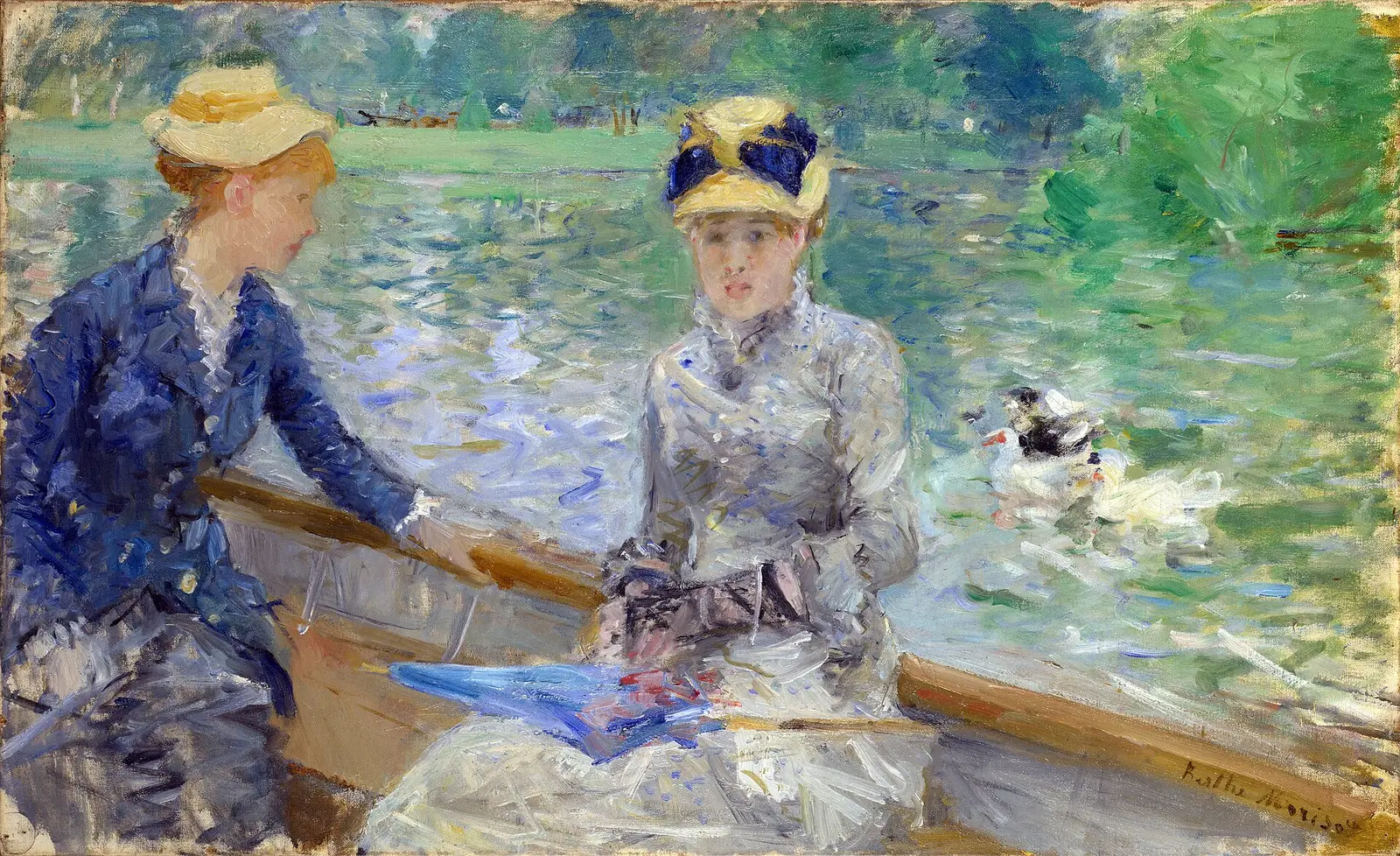
Impressionists used visible brushwork to catch changing light and contemporary life. The artists later grouped as Post-Impressionists began with those discoveries but pushed in different directions: Cézanne toward structure, Seurat toward theory, Van Gogh toward emotional intensity, and Gauguin toward symbol. It is more accurate to picture one road branching into several than one style replacing another.
In one sentence: Impressionism shared a platform; Post-Impressionism names divergent problems
The Impressionists did not all paint alike, but they shared a concrete undertaking. Between 1874 and 1886 they organized eight exhibitions outside the official Salon system. Their subjects often overlapped as well: boulevards, cafés, theaters, railways, suburban leisure, and landscapes transformed by modern life.
Post-Impressionism had no equivalent membership list, manifesto, or recurring exhibition. Its artists inherited brighter palettes and visible marks, then asked what painting could do beyond recording a passing visual sensation.
The Post-Impressionists did not name themselves
British critic Roger Fry helped establish the label through the 1910 London exhibition Manet and the Post-Impressionists. By then Cézanne had died in 1906, Van Gogh in 1890, and Gauguin in 1903. They did not gather under the term as a self-declared movement.
That history explains why a single list of visual traits fails. The Met describes these artists as moving beyond Impressionist naturalism in search of independent ways to express emotion and symbolic content. Yet Seurat’s controlled dots and Van Gogh’s restless curves are plainly not one technique.
Use Post-Impressionism as a map of routes out of Impressionism, not as a box of paintings that look the same.
Compare light, color, form, and subject
| Question | Impressionism | Post-Impressionism |
|---|---|---|
| Starting point | Changing light and modern life rendered in visible strokes | Impressionist discoveries redirected toward individual problems |
| Color | Color as it shifts under particular light | Color reorganized for structure, emotion, symbol, or optical theory |
| Form | Contours often loosened to preserve a momentary impression | Forms rebuilt, flattened, or divided into systematic marks |
| Process | Outdoor observation developed both outside and in the studio | Observation combined more forcefully with memory, theory, and construction |
| Group | Eight independent exhibitions from 1874 to 1886 | No shared manifesto or common exhibition program |
Light
Monet repeatedly painted one motif as weather and time altered its appearance. In later work, light could also become a constructed force. The rings around the stars in The Starry Night do not function as an astronomical record; they make the experience of light physically emphatic.
Color
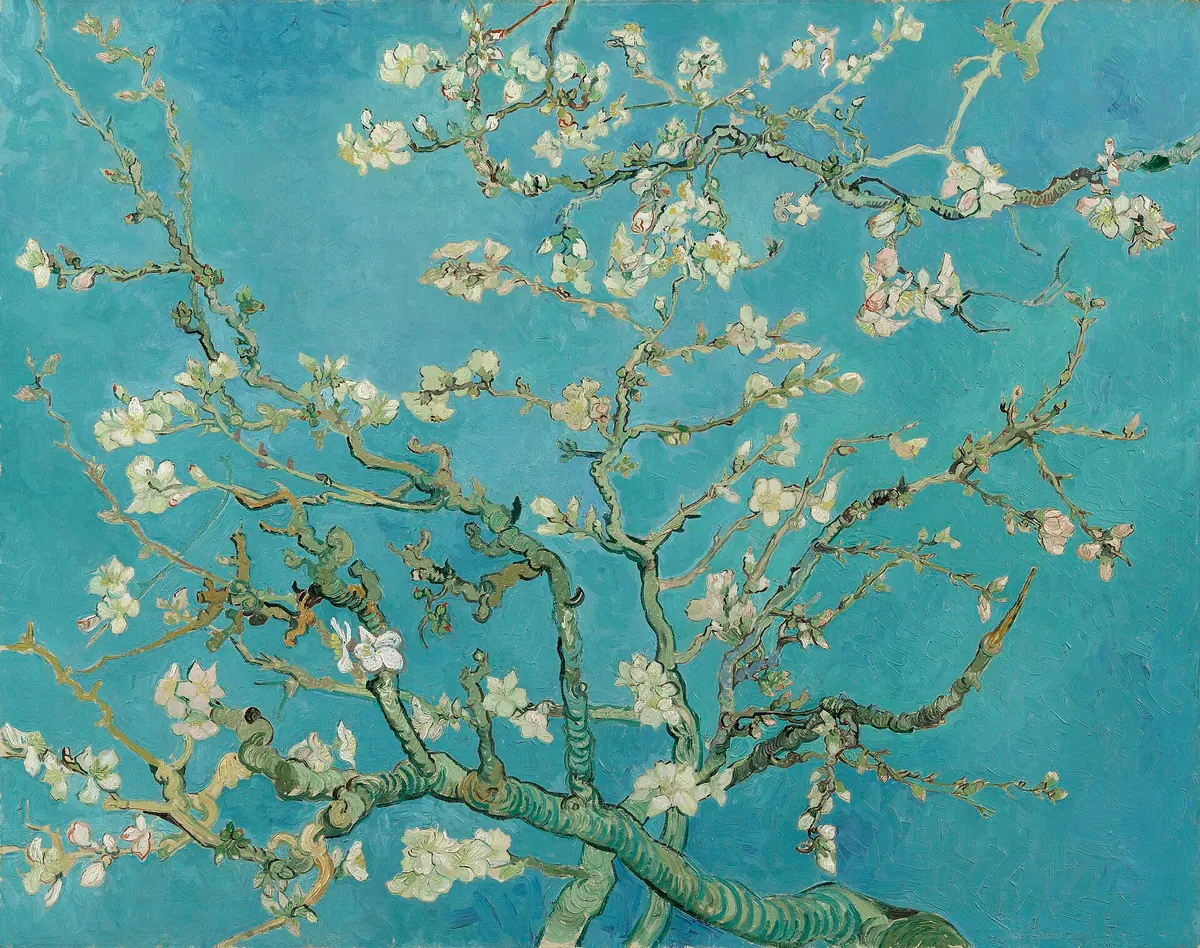
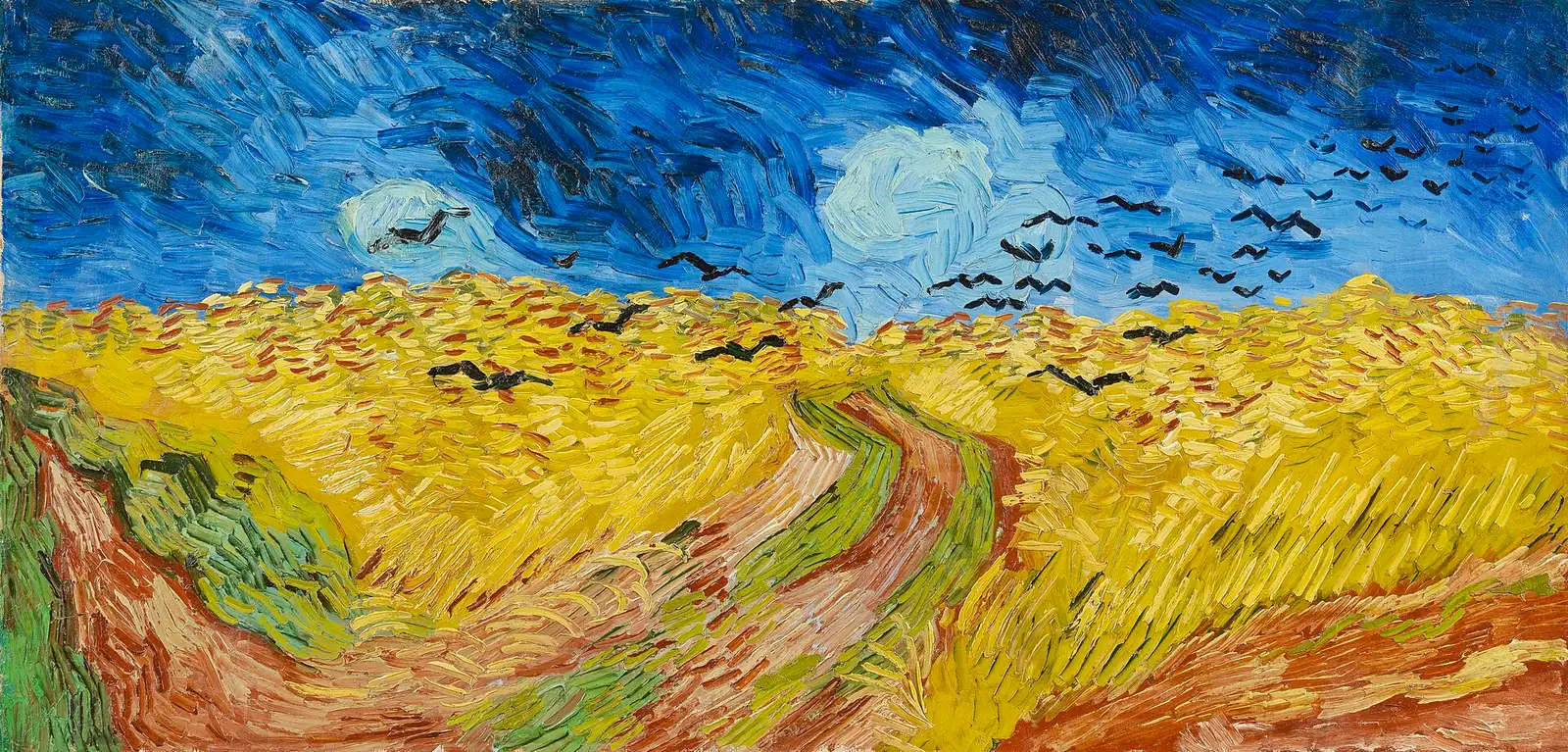
Impressionists found blue, violet, and reflected color in shadows rather than treating shadows as neutral brown or black. Van Gogh and Gauguin weakened the obligation to reproduce observed color even further. Yellow skies, red grounds, or green faces could carry emotion and meaning.
Form
Impressionist strokes often loosen boundaries. Cézanne did not simply let objects dissolve; he rebuilt their weight through adjoining planes of color. Seurat moved in another direction, regularizing the brushmark into small units and organizing the whole surface deliberately.
Subject
Modern cafés, parks, and streets remained available, but memory, religion, and myth became more assertive. Van Gogh’s invented village and Gauguin’s symbolic scenes no longer depended on the scene immediately before the artist.
Cézanne, Seurat, Van Gogh, and Gauguin did not move together
| Artist | Primary problem | What changed |
|---|---|---|
| Paul Cézanne | Structure | Rebuilt nature through durable volumes and shifting viewpoints |
| Georges Seurat | Theory | Divided color into small marks intended to mix optically |
| Vincent van Gogh | Emotion | Turned observed landscapes into directional strokes and intensified color |
| Paul Gauguin | Symbol | Used flat color and outline to construct memory, religion, and myth |
Calling all four “artists who used brighter color than the Impressionists” erases the decisive differences. Seurat converted spontaneous-looking strokes into a system. Cézanne sought lasting construction within unstable perception. Van Gogh made the direction of a stroke carry psychological pressure. Gauguin made flat areas and outlines serve remembered or imagined symbols.
Those paths mattered to Cubism, Fauvism, Expressionism, and abstraction in different ways. Post-Impressionism is historically useful because it multiplied painting’s problems, not because it arrived at one finished solution. The seven-minute guide to looking at abstract art follows one of those later paths through color, line, shape, and scale.
Five questions to ask in front of a painting
- Is color tracking a condition of light, or departing from observation for emotion or symbol?
- Do the marks preserve the speed of perception, or follow a repeatable system?
- Do contours dissolve, or are objects reconstructed as simplified masses?
- Does the scene feel observed directly, or assembled from memory and myth?
- Across several works by the artist, what problem keeps returning?
No single clue settles the label. An outdoor landscape is not automatically Impressionist; visible dots do not always mean Seurat; forceful color does not automatically mean Van Gogh. Date, exhibition history, the artist’s writing, and several visual features must agree.
The distinction is clearest when classification follows observation rather than replacing it.
For a close example of observed landscape rebuilt through memory and expressive brushwork, read The Starry Night explained. To put one of these paintings on a desktop, see which Impressionist painters fit a Mac screen.
Manet, Degas, and Seurat show why the boundaries overlap
Édouard Manet
Manet shaped the younger group but did not participate in their eight exhibitions, continuing to seek recognition at the Salon. “Father of Impressionism” describes influence, not formal membership in the exhibition group.
Edgar Degas
Degas participated in seven of the eight exhibitions, yet preferred carefully constructed studio work to a simple ideal of painting outdoors. His dancers and racecourses expose the weakness of defining Impressionism only as plein-air landscape.
Georges Seurat
Seurat exhibited A Sunday on La Grande Jatte—1884 at the final Impressionist exhibition in 1886. His method was soon called Neo-Impressionism, while histories of Post-Impressionism also treat it as a major branch. Labels can overlap because each explains a different relationship.
The timeline is an overlap, not a relay race
| Year | Event |
|---|---|
| 1874 | First Impressionist exhibition, including Monet, Degas, Morisot, Renoir, Pissarro, and Cézanne |
| 1886 | Eighth and final Impressionist exhibition; Seurat shows A Sunday on La Grande Jatte |
| 1888 | Van Gogh paints the Arles Sunflowers and lives briefly with Gauguin |
| 1889 | Van Gogh paints The Starry Night at Saint-Rémy |
| 1910 | Roger Fry uses “Post-Impressionists” in the title of his London exhibition |
Post-Impressionism did not begin the day after the final Impressionist exhibition. Cézanne participated in the first exhibition in 1874; Seurat appeared in the last in 1886. Careers and generations overlap.
Instead of asking only which label fits, ask: what did this artist retain from Impressionism, and what did they find insufficient? That question makes the difference visible in the work itself.
Sources and collection records
Keep a painting like this on your Mac
Art4 lets you browse public-domain paintings by artist, movement, color, and screen shape, read the story behind each one, and set it as your wallpaper, or let it rotate on its own. Try it free for 7 days; if you keep it, it’s a one-time $14. Requires macOS 14 or later, or Windows 10 or later.