
Monet's The Magpie: Why Are the Shadows on the Snow Blue?
Why are the shadows blue in Monet's The Magpie? Shaded snow is lit by the sky, not the sun. What the bird means, and why the 1869 Salon rejected the painting.

In Monet's The Magpie, long blue-violet shadows cross a field of snow, and the snow in the sun looks faintly yellow and pink. Many people notice that color before they notice the small black-and-white bird on the gate. The blue is not a painter's trick. On a clear day, a shadow on snow is lit by the sky instead of the sun, and Monet painted what that light looks like. This guide explains the physics, shows where to look in the picture, and covers what the bird means, why the painting was rejected in 1869, and how it fits Monet's other snow scenes.
Why are the shadows blue in The Magpie?
A shadow on snow is not an absence of light. It is a place the sun cannot reach but the sky still can. A clear sky is blue, so the snow in shadow is lit mainly by blue light and looks blue. Purdue University's physics demonstration on colored shadows uses exactly this example: on a clear day, the shadow the sun casts on snow is blue, because with the sun's rays blocked, that patch picks up the color of the sky.
The sunlit snow next to it gets direct sunlight as well as skylight, and low winter sun is warm in tone. That is why Monet's lit snow carries cream, yellow, and pale pink, while the shaded snow turns lilac and blue. The two areas sit side by side across the foreground, and the contrast makes each one look stronger. Next to warm snow, a cool shadow tends to look even cooler.
The Musée d'Orsay, which owns the painting, puts it simply: sun and shade construct the picture. The museum adds that this contrast conveys the odd nature of snow, partly solid and partly liquid, instead of leaving it a flat white surface.
Two limits are worth keeping in mind. First, the physics explains why blue shadows exist outdoors; it cannot tell us what Monet thought on a given morning, and the museum's commentary does not tie the picture to any color theory. Second, the sky in the painting is pale and hazy, not a deep blue. We cannot recover the exact weather from the canvas. What we can say is that Monet painted shadows as colored light, not in the dark browns and greys the public knew from studio painting.
Find the magpie first, then follow the shadows
Start at the left of center. A wooden gate stands there, built like a short ladder: two posts with several horizontal bars. On the top bar sits the magpie, a small dark shape with a flash of white. Compared with the size of the field, it is tiny, set down with a few strokes.
From the gate, a low fence runs to the right. It is a woven wattle fence, and snow sits on top of it in thick, uneven mounds. Where the snow is thin, dark branches show through. Behind the fence is a house with a blue-grey snowy roof and two red chimneys, and on the right, trees whose branches are loaded with snow.
Now drop your eyes to the foreground. Long blue stripes slant across the snow toward you and down to the right. These are shadows of the gate, the fence, and its posts. Because they stretch toward the viewer, the sun must be low and on the far side of the fence, toward the left, which is typical of a winter day.
Follow one stripe from the base of the gate down toward the bottom edge. The gate itself is brown wood; its shadow on the snow is blue-violet. Seeing the same shape twice, once as an object and once as colored light, is the quickest way to understand what the painting is about.
The snow is not white: yellow, pink, blue, and grey
Pick one patch of sunlit snow in the lower foreground and look at it for a few seconds. It is not paper white. There are touches of cream, yellow, and pink in it. Then move your eye a short distance into the band of shadow below the fence, where the same snow is blue and lilac.
Next, compare the roof of the house with the snow in the foreground. The roof is a broad, even blue-grey plane. The foreground is built from short, separate strokes laid side by side. Monet changes the handling as well as the color, so the near snow looks textured and the far roof looks flat and distant.
The trees on the right are another lesson. Snow on the branches is laid down in irregular white marks that follow the dark lines of the wood, and in places the white merges with the pale sky. Up close they are just paint marks; from a little farther away they become branches heavy with snow.
You do not need to raise the saturation of a photo to see the blue. Comparing two neighboring areas within the same image is enough. If you are looking on a screen, view the whole painting first, then zoom in on the shadow under the gate, then zoom back out.
What does the magpie mean?
People often search for the symbolism of the magpie, since the bird carries meanings in folklore. Nothing in the museum's commentary suggests Monet intended any of them, and the Orsay does not read the painting that way.
The Musée d'Orsay's commentary points in a different direction. Instead of the hunting scenes and forest drama that Gustave Courbet had used in his snow paintings, Monet chose a frail magpie on a gate, which the museum compares to "a note on a staff of music." The bird is a small dark accent in a large field of light, like a single note that gives a page its rhythm.
That reading fits what you can test with your own eyes. Cover the bird with a finger, and the picture becomes an even spread of light with no place to rest. Uncover it, and your eye has a starting point: the bird, then the gate, then the shadows. The magpie is the key to the composition rather than a hidden message.
So the most useful answer to "what does The Magpie mean" is about seeing. It is a painting about how sunlight, shade, and a single dark accent can organize an almost white canvas.
Snow as a test for a new kind of painting
Snow was a demanding subject for painters in the late 1860s. It is bright, it changes by the hour, and painted badly it turns into chalky white or muddy grey. The Orsay describes Monet, bringing Pissarro, Renoir, and Sisley along with him, taking on the challenge of the snow-covered landscape, a subject Gustave Courbet had explored with great success not long before.
Monet's version is quieter than Courbet's. There are no hunters or game, only a fence, a house, some trees, and one bird. What carries the picture is light: the warm sun, the blue shade, and the soft edges between them. The Orsay describes the Impressionist landscape taking shape here, about five years before the group's first exhibition in 1874.
The painting is also large for a snow scene. At 89 by 130 centimeters it is noticeably bigger than Monet's Snow Scene at Argenteuil of 1875, which the National Gallery in London calls the largest of his Argenteuil snow scenes at 71.1 by 91.4 centimeters. Monet was treating a modest winter view at the scale of an ambitious exhibition picture.
To see where this approach led over the next few years, compare it with Monet's Poppies, where the same attention to color shifts to a summer field near Argenteuil.
Why the 1869 Salon rejected The Magpie
The Salon was the official annual exhibition in Paris, and acceptance mattered for an artist's reputation and sales. In 1869 its jury turned The Magpie down.
The Musée d'Orsay connects the rejection to the novelty and daring of Monet's approach, which it describes as more about perception than description. The canvas was painted on the spot near Étretat in unusually pale, luminous colors. The critic Félix Fénéon later remarked that a public used to heavy, dark studio painting was astonished by such a pale picture.
It is tempting to say the jury rejected the painting because of the blue shadows. The museum does not say that. Its explanation concerns the whole picture: the pale palette, the outdoor light, and a way of painting what the eye sees rather than what the mind knows about objects. The blue shadows are one part of that, not the whole story.
Today the painting looks calm and inviting, which makes the rejection hard to imagine. That gap is useful. Before looking again, decide which feature would have seemed newest to a viewer in 1869: the colored shadows, the near-white sky and snow, or a subject as small as one bird on a gate.
The Magpie at a glance
| Item | Detail |
|---|---|
| Title | The Magpie (La Pie) |
| Artist | Claude Monet (1840–1926) |
| Date | 1868–69, painted near Étretat in the winter of 1868–69 |
| Medium and size | Oil on canvas, 89 × 130 cm |
| Museum | Musée d'Orsay, Paris |
| Inventory number | RF 1984 164 |
| Entered the collection | Bought in 1984 |
| First public test | Rejected by the jury of the 1869 Salon |
The French title, La Pie, and the English title, The Magpie, name the bird, not the snow. When you search for a good image, those titles together with "Orsay" find the right painting faster than a generic search for Monet snow scenes.
The Musée d'Orsay bought the painting in 1984, which is why its inventory number begins with RF 1984. Because it is a public-domain work in a national collection, good reproductions are easy to find; start from the museum's own page so the date, size, and title come with the image.
Monet's other snow paintings
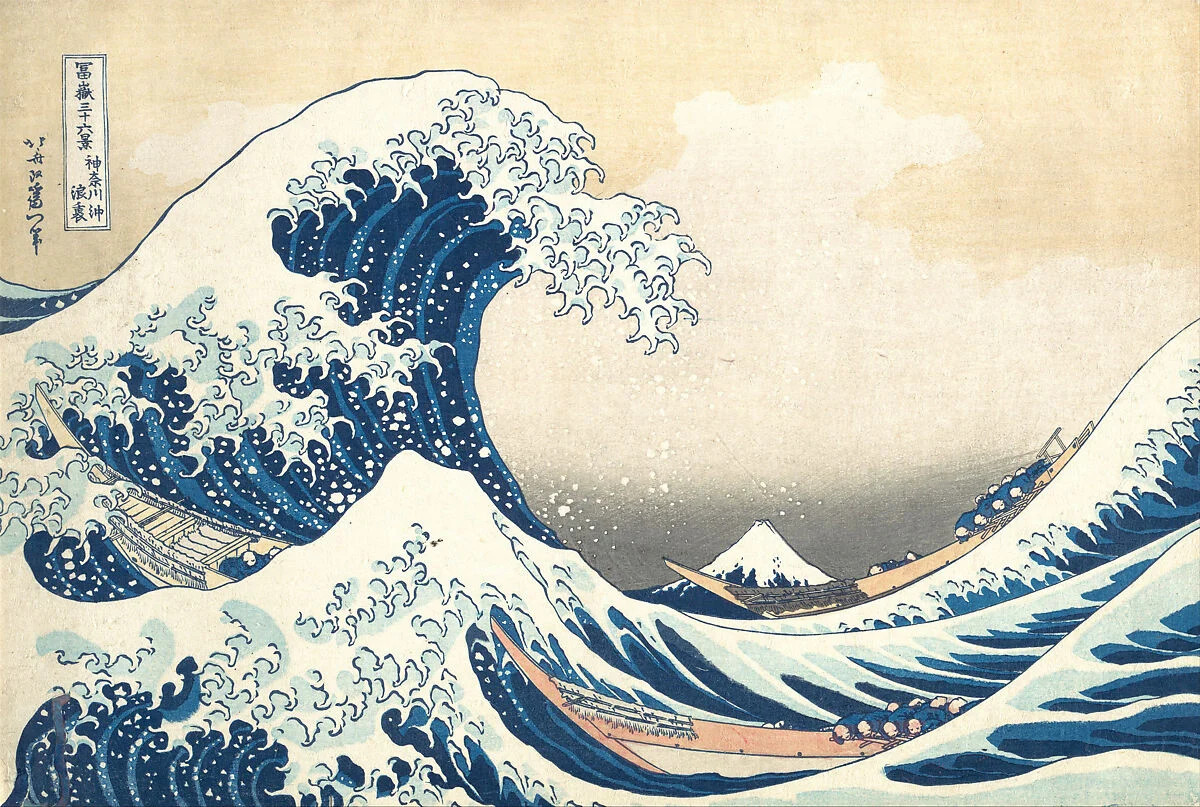
The Magpie was not a one-off. Museum Barberini in Potsdam notes that around 140 winter paintings are documented in Monet's work, and says he was fascinated by colored reflections on snow, frost, ice, and hoarfrost, an interest partly inspired by the Japanese color woodcuts he collected.
| Painting | Date | Museum | What to look for |
|---|---|---|---|
| The Magpie | 1868–69 | Musée d'Orsay, Paris | Bright sun, long blue-violet shadows, warm sunlit snow |
| Snow Scene at Argenteuil | 1875 | National Gallery, London | Overcast afternoon; whites, blues, and greys warmed with pink |
| Frost | 1875 | Museum Barberini, Potsdam | A frosted meadow in varied blue tones |
| Lavacourt under Snow | About 1878–81 | National Gallery, London | Cold tones for the shaded bank, whites laid over with blue |
Comparing them is the best way to test the blue-shadow explanation. In the National Gallery's Snow Scene at Argenteuil, one of 18 canvases recording the snowy winter of 1874–75, the afternoon is overcast and the sun is fading. With the sun fading behind cloud, the museum describes an almost monochrome palette of whites, blues, and greys warmed with pink, instead of the sharp split between sun and shade in The Magpie. In The Magpie, bright sun produces sharp, colored shadows. The light changes, and the color of the shadows changes with it.
Lavacourt under Snow, also in London, may date to the unusually cold winter of 1879–80. The National Gallery notes that snow reflects red, pink, purple, and blue at different times of day, and that the cold tones suggest this side of the river lies in shadow. Museum Barberini's Frost, probably painted early in 1875, shows a frosted meadow in varied blue tones.
A viewing sequence for The Magpie
- Find the magpie on the top bar of the gate
- Follow the gate down to the snow and find its shadow
- Compare the brown wood with the blue-violet shadow of the same shape
- Move from a shadow stripe into the sunlit snow and name the colors you see
- Compare the even roof of the house with the broken strokes in the foreground
- Look at the snow on the right-hand trees up close, then from a distance
- Cover the bird with a finger and notice how the picture loses its starting point
At the end, return to the shadow under the gate. The painting looked cold at first, yet the sunlit snow is warm. The Magpie is less a picture of winter than a picture of two kinds of light on the same winter day.
The Magpie is one of the Monet paintings in the Monet wallpaper guide for Mac, and it also appears among the Impressionist wallpapers for Mac. Its wide format suits a laptop screen with very little cropping. For another Monet question with a surprising answer, read How many Water Lilies did Monet paint?
Keep Monet's winter light on your desktop
Art4 turns public-domain masterpieces such as The Magpie into Mac wallpapers. Browse by artist, movement, or theme, and let a new painting arrive each day.
Primary sources and collection research
- Musée d'Orsay: Claude Monet, The Magpie (La Pie)
- Google Arts & Culture: The Magpie, with commentary by the Musée d'Orsay
- Purdue University Physics and Astronomy: Colored Shadows
- National Gallery, London: Claude Monet, Snow Scene at Argenteuil (1875)
- National Gallery, London: Claude Monet, Lavacourt under Snow (about 1878–81)
- Museum Barberini: Claude Monet, Frost (1875)
- Image: Wikimedia Commons / Google Art Project, The Magpie (public domain)
Keep a painting like this on your Mac
Art4 lets you browse public-domain paintings by artist, movement, color, and screen shape, read the story behind each one, and set it as your wallpaper, or let it rotate on its own. Try it free for 7 days; if you keep it, it’s a one-time $14. Requires macOS 14 or later, or Windows 10 or later.