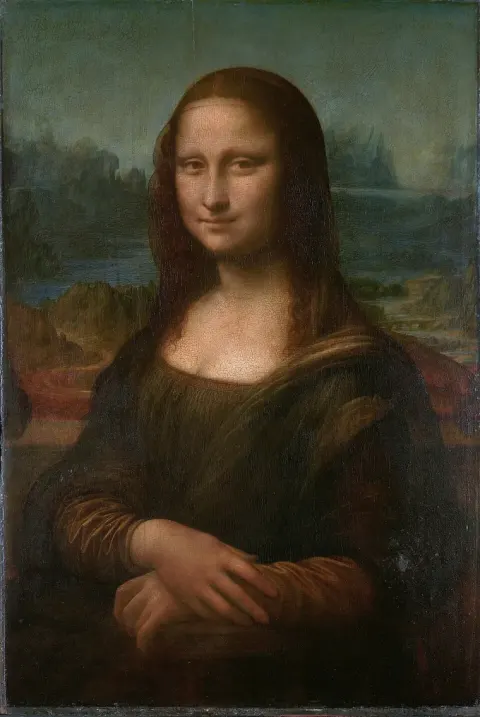

Why Do Old Paintings Look Yellow? Varnish, Dirt and Faded Paint
Aged natural-resin varnish, the dirt on it and changes in the paint turn old paintings yellow. Varnish can be replaced; paint changes are mostly permanent.
When an old painting looks yellow or brown, the color can come from three places: aged varnish, dirt on top of it, or changes in the paint itself. Natural-resin varnishes yellow with age, and some turn brown. Conservators can replace an old varnish, but changes in the paint are usually permanent.
Why do old paintings look yellow?
The yellow sits in the varnish, in the dirt on top of it, or in the paint itself. The National Gallery in London's glossary says varnishes tend to darken and discolor over time, so they have to be removed and replaced.
The yellow and brown come from three places:
- the varnish itself, which yellows and can turn brown
- dirt and smoke on top of it, and old retouchings that have darkened
- the paint underneath, whose oil yellows and whose pigments can fade or darken
Conservators can remove much of the first two. The third is usually permanent.
Why varnish turns yellow
Varnish is a coating laid over the paint. The National Gallery's glossary says it gives a painting its gloss and protects the paint.
The Canadian Conservation Institute explains that natural-resin varnishes, made from dammar, copal, mastic or amber, yellow over time; how far, and whether they turn brown, depends on the resin, its preparation and its additives. In a 2025 paper published by the National Gallery of Art in Washington, the conservation scientist Barbara Berrie adds that the oil-containing varnishes common until the nineteenth century darken and become insoluble as they oxidize.
Dirt collects on top. Berrie describes swabs coming away loaded with grime, darkened varnish and murky old restorations, and recalls a painting once covered in a yellow haze of tobacco smoke. Old retouchings darken too. In its report on Jan van Eyck's portrait of his wife, Margaret, the National Gallery says discolored varnish, darkened repairs and other small defects together made her look older and more tired than her 33 years.
What came off Vermeer's Woman in Blue
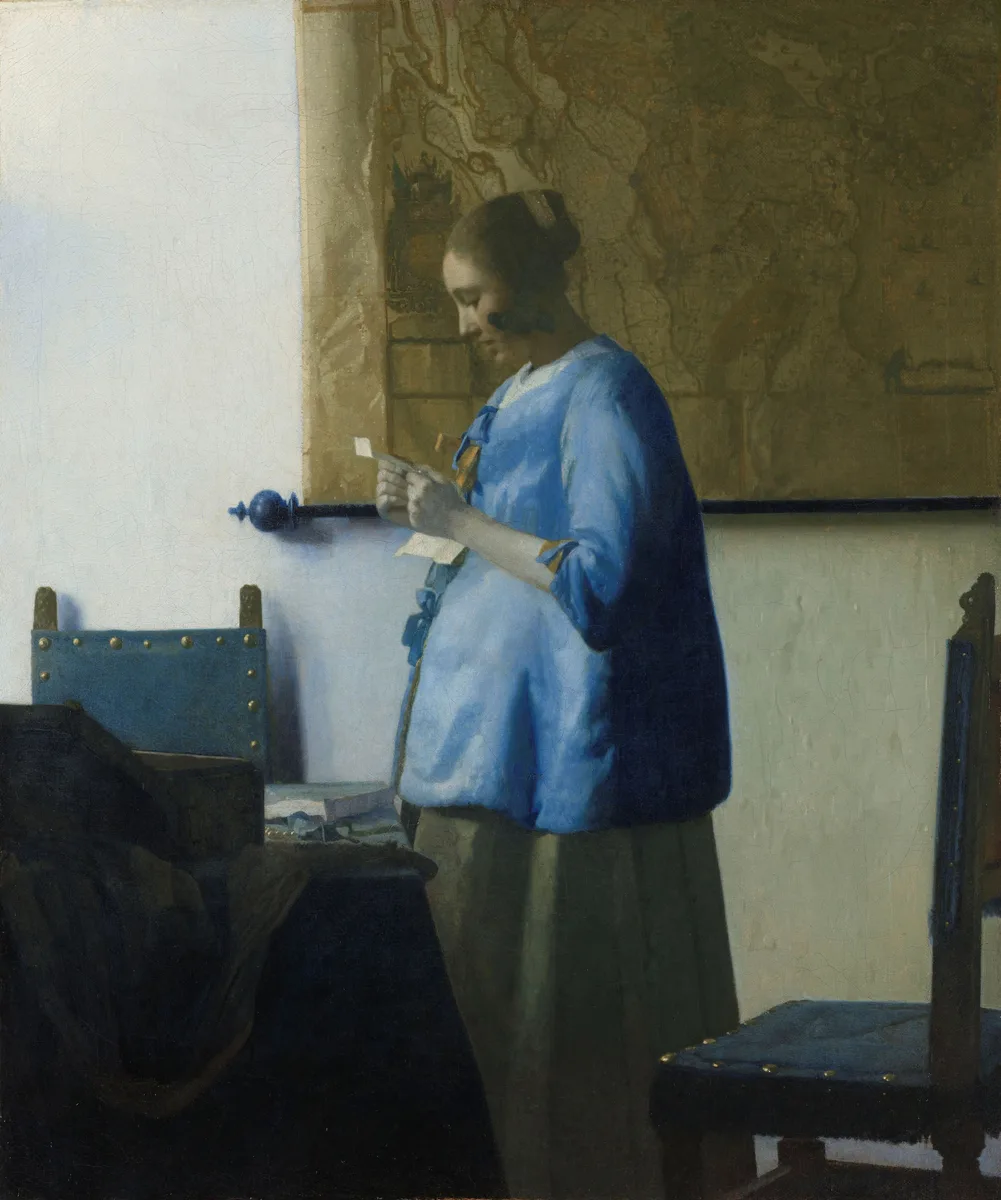
The Rijksmuseum restored Vermeer's Woman Reading a Letter (c. 1663), also called Woman in Blue Reading a Letter, in 2010–11. The conservator, Ige Verslype, found it under a highly oxidized, irregular and yellowed varnish, with discolored retouching and overpaint along the bottom edge.
Under ultraviolet light the varnish glowed bright green, and patchily: the layer, and so the yellowing, was uneven. The glow was strongest at the bottom, where a 1962 cleaning had removed the old varnish only partly.
The team removed the old varnish to bring back the painting's cool tones, using an organic solvent after several tests. The shift in color was dramatic, Verslype writes, above all in the shadows of the blue jacket. Under the varnish the chairs and the jacket had looked like the same blue; once it was gone, it was clear Vermeer had used two different blues.
Removing old restorations in the lower right corner uncovered small painted brass nails on a chair. In the image above you can see them along the seat of the chair at right, whose blue differs from the jacket's. A stable synthetic varnish went on before the final retouching, then a last coat of natural varnish.
Colors cleaning cannot bring back
Varnish is not the whole story. The Canadian Conservation Institute notes that oil paint tends to yellow as its oil binder ages. The National Gallery in London says light can fade or darken pigments and darkens the oil itself. These changes sit in the paint, so removing the varnish does not undo them.
Berrie gives examples of colors that change:
- Red and yellow lakes, pigments made from plant or insect extracts, bleach quickly in light. Greens mixed with a yellow lake turn blue as the yellow goes, which is why some painted leaves now look oddly blue.
- Verdigris, a green painters needed for fabrics and foliage, darkens to a disagreeable brown.
- In Monet's Rouen Cathedral, West Façade, Sunlight at the National Gallery of Art, the flecks of reflected sunlight are brown instead of yellow, because the cadmium yellow has discolored.
Faces change as well. Red lakes used for flesh tones fade, and Berrie writes that we sometimes cannot be sure whether a sitter was always pale or the blush has faded. The Mauritshuis says the black background of Girl with a Pearl Earring was once a green curtain, lost as the translucent green paint changed over the centuries.
How much varnish comes off
Even a cleaned painting may keep a thin layer of old varnish on purpose.
Earlier cleaning was rough: Berrie writes that restorers removed old varnish by physical means, sometimes with pumice or ashes, and often abraded the paint. Conservators now use solvents and stable varnishes that are easy to remove later. Even so, taking off a coating reveals damaged pigments and losses along with the bright colors.
How far to go is decided painting by painting. On Leonardo's Virgin of the Rocks, the National Gallery did not remove all of the degraded varnish left from a late-1940s cleaning; it reduced it to a level that lets the painting be seen properly. For a painting where varnish and pigment change are both part of the story, see The Night Watch.
What to look for in a museum
Clues to whether the yellow is in the varnish or in the paint:
- Look at whites and blues. When the varnish came off the Vermeer, the pale wall left of the woman showed a cool blue tone. Creamy whites and dull blues may mean yellowed varnish is still there.
- Look for uneven yellowing. In van Eyck's portrait of Margaret, part of the veil looked much brighter where the varnish was thinner.
- Look at leaves. If they look too blue, a yellow mixed into the green may have faded.
- In nineteenth-century paintings, check whether yellow highlights have turned into brown flecks.
- Check the museum's website or conservation reports for when the painting was last cleaned.
Two Vermeer blues on your desktop
Woman Reading a Letter is one of the paintings Art4 can set as your wallpaper. Compare the jacket's blue with the chairs' on your screen, day after day.
Sources and image
- National Gallery, London: Glossary, “Varnish”
- Canadian Conservation Institute: “Caring for paintings”
- National Gallery, London: “Paintings and their Environment”
- Barbara H. Berrie, “Pigment Alteration and Color Change,” Facture vol. 7, National Gallery of Art, Washington, 2025
- Ige Verslype, “The restoration of Woman in Blue Reading a Letter by Johannes Vermeer,” The Rijksmuseum Bulletin, 2012
- Rijksmuseum: Woman Reading a Letter, SK-C-251
- National Gallery, London: “Why was the painting cleaned?” (The restoration of Margaret, the Artist’s Wife)
- National Gallery, London: “Restoring Leonardo’s Virgin of the Rocks”
- Mauritshuis, “Closer to Vermeer and the Girl” (research on Girl with a Pearl Earring)
- Image: Wikimedia Commons, Brieflezende vrouw (public domain)
Keep a painting like this on your Mac
Art4 lets you browse public-domain paintings by artist, movement, color, and screen shape, read the story behind each one, and set it as your wallpaper, or let it rotate on its own. Try it free for 7 days; if you keep it, it’s a one-time $14. Requires macOS 14 or later, or Windows 10 or later.